
With all the hype around the application of AI at the moment I keep coming back to this simple analogy articulated by Steve Jobs when talking about his vision for man’s relationship with computers:
“I read a study that measured the efficiency of locomotion for various species on the planet. The condor used the least energy to move a kilometer. And, humans came in with a rather unimpressive showing, about a third of the way down the list. It was not too proud a showing for the crown of creation. So, that didn’t look so good. But, then somebody at Scientific American had the insight to test the efficiency of locomotion for a man on a bicycle. And, a man on a bicycle, a human on a bicycle, blew the condor away, completely off the top of the charts. And that’s what a computer is to me. What a computer is to me is it’s the most remarkable tool that we’ve ever come up with, and it’s the equivalent of a bicycle for our minds.”
Jobs believed that man as a toolmaker has the ability to make tools that can amplify the inherent abilities that they have. AI is also one of the most remarkable tools that we’ve ever come up with and the tech optimist in me believes that, like the computer, it has the potential to enhance our abilities in the broadest possible ways (including the creative process).
Another way of looking at it is this. When medieval builders were constructing Cathedrals the keystone was the central stone at the summit of an arch which locks the whole structure together. No mortar was used to cement the stones to each other. The strength of the arch comes from its design and without the keystone the whole structure collapses.
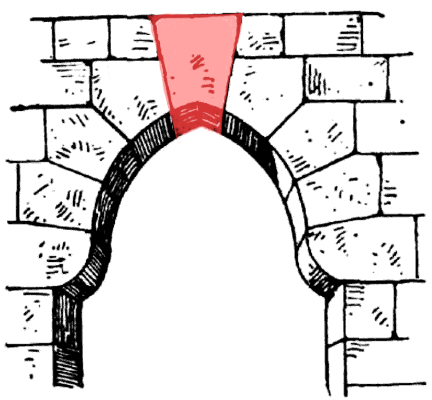
AI is a keystone innovation. It is a development from which multiple other innovations will flow. It is the enabler that supports a myriad of transformational new capabilities and ideas.
Image: Public Domain, https://commons.wikimedia.org/w/index.php?curid=95023097
Leave a Reply