
The latest version of Gartner’s hype cycle for Digital Marketing has an interesting addition which they’ve placed almost at the top of the peak of inflated expectation: ‘Emotion AI for marketing’. Gartner VP Nicole Greene describes Emotion AI as using:
‘…AI techniques to analyze the emotional state of a user (via computer vision, audio/voice input, sensors and/or software logic) to tailor creative messaging and engagement with digital people and chatbots. Emotion AI covers a broad spectrum of techniques that infer emotion and initiate responses by performing specific actions to fit the mood of the customer, based on body language, tone and other inputs.’
She goes on to describe how emotions that are read and interpreted by AI (using voice analysis, biometric signals, and body language) can be used to tailor engagement, test reactions, and ‘assemble experiences to generate a response’.
First, let it be said that I’m not a huge believer in the accuracy of Gartner Hype Cycles (check out this analysis of 20 years of hype cycles) but I can well believe that tech players are looking with interest at the whole idea of being able to take emotions as user inputs. A few years ago Amazon filed a patent relating to the ability the read emotions via your voice and interactions (via Alexa and other devices), but not much came of it. Apple more recently filed a patent to turn their earbuds into a ‘biosensing device’ which may be used to measure biometric signals from a user. Spotify have one to read emotions based on speech recognition and background sounds. And the technology and AI is already there to enable this to happen (though I’ve no idea how accurate it is).
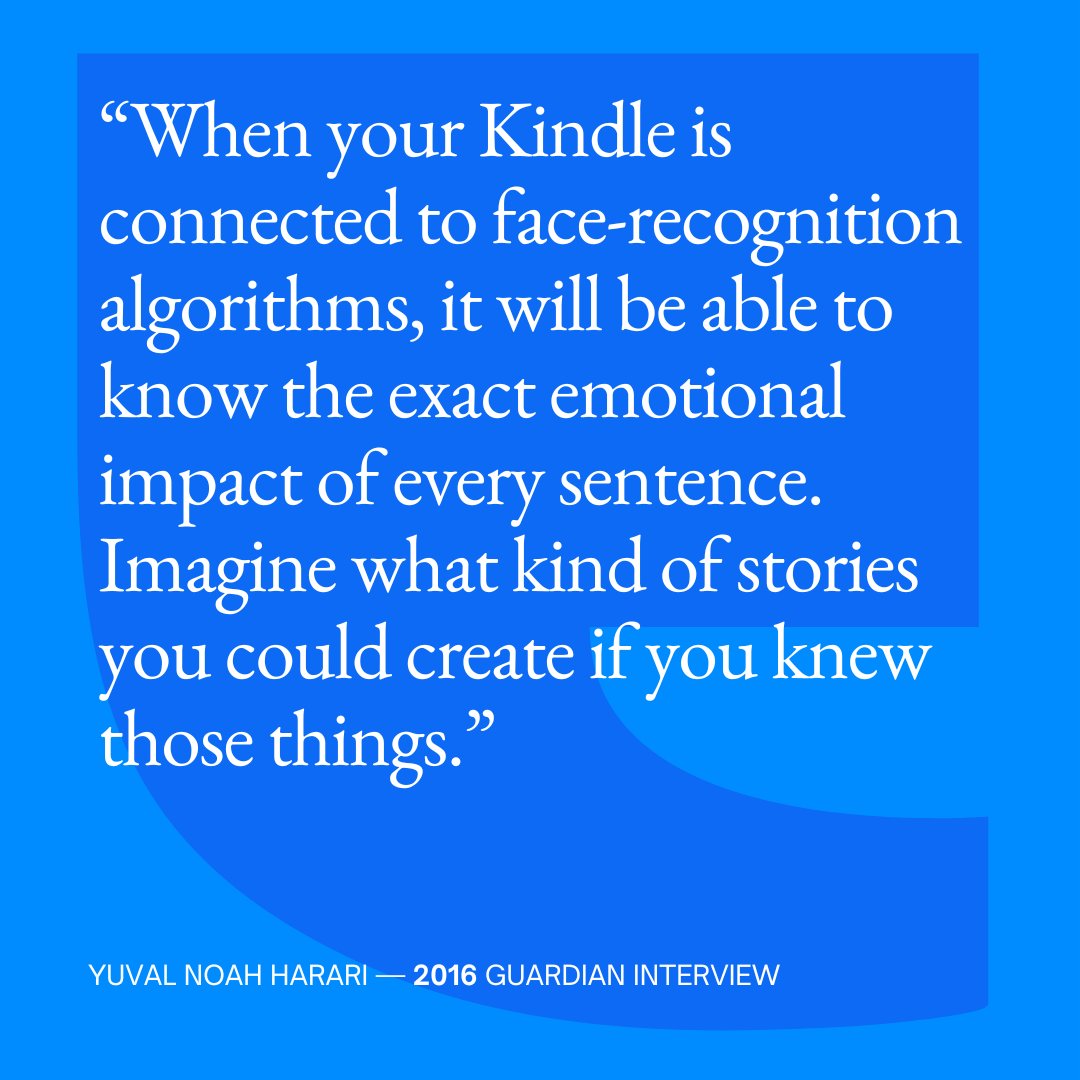
It’s a slightly terrifying idea. Not least because of the privacy issues involved, and the potential for misinterpretation. But also for what it may mean beyond marketing. A day after reading about Emotion AI I came across Yuval Noah Harari’s post in which he asks the question (making the point that in the age of GenAI and facial recognition these are ideas that relate to present day reality): What will happen to storytelling when books start reading people?
It’s a fascinating question. In the 2016 Guardian interview from which the quote above comes he talks about how your Kindle device will be able to know the exact emotional impact of every individual sentence. ‘Imagine..’ he says, ‘…what kind of stories you could create if you knew those things’. Alongside books, it’s not too far a leap to imagine this happening in TV programmes and films as well. When AI is able to generate quality video content in near realtime it’s not hard to imagine that it might do this based on emotional inputs from the audience – in other words the way in which I respond to a storyline/scene/character influencing how the AI shapes the rest of the story and generates the content. Yikes.
I’m sure we’ll hear a lot more about Emotion AI going forwards and I’m also sure that there will be an almighty debate about the rights and wrongs of this approach. But it’s going to be really interesting to see where this goes.
P.S. A shout out here as well for Scott Brinker’s idea of the ‘Goldilocks Zone’ of tech investment which relates to taking a sensible approach to managing investment in technology trends and flattening the peaks and troughs of the hype cycle.
I write a weekly Substack of digital trends, transformation insights and quirkiness. To join our community of thousands of subscribers you can sign up to that here.
To get posts like this delivered straight to your inbox, drop your email into the box below.
Leave a Reply